
Is It a Verruca or a Corn? How to Tell the Difference
Why the confusion happens
Both verrucae and corns cause hard skin and pain under pressure. Many patients self‑diagnose incorrectly, which delays appropriate treatment.
The important thing to know is this: verrucae are harmless, but they can be stubborn, uncomfortable, and surprisingly disruptive. Understanding what they are — and what they aren’t — is the first step toward dealing with them properly
Key differences
Verruca: interrupts skin lines, may have black dots, hurts when squeezed
Corn: preserves skin lines, no dots, hurts when pressed directly
Verruca: caused by a virus
Corn: caused by pressure and friction
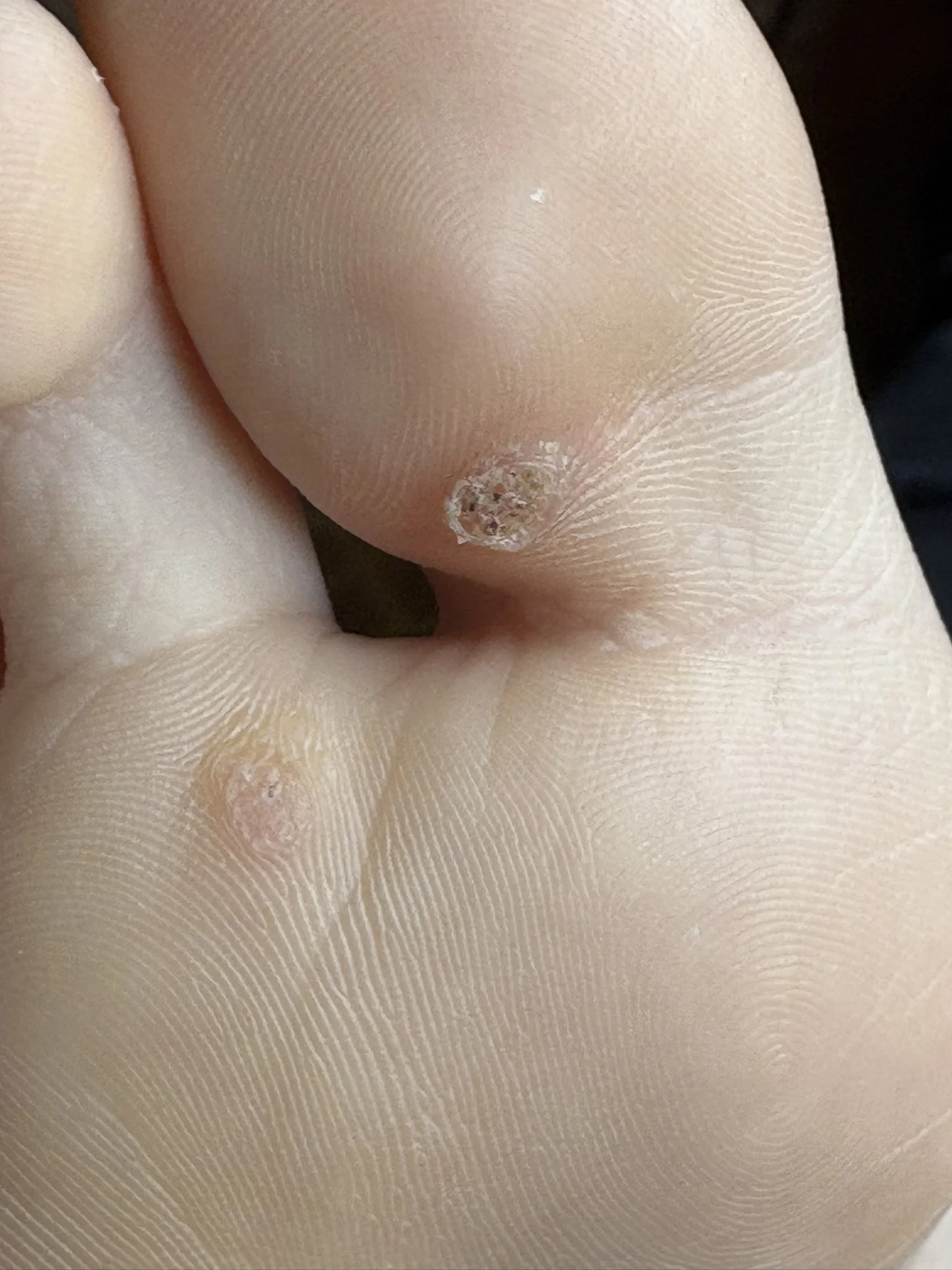
Verruca lesions - note the warty appearance
Why it matters
Treating a corn like a verruca wastes time. Treating a verruca like a corn spreads infection and increases pain.
What a podiatrist does
Clinical assessment
Sharp debridement to reveal diagnostic features
Discussion of treatment options
Advice on footwear and pressure management
When to book a specialist appointment
Persistent pain
Recurrent lesions
Uncertainty about diagnosis
Failed self‑treatment
Final message
If you’re unsure, get it checked. A short assessment can prevent months of ineffective treatment.
A Final Reassurance
Verrucae are incredibly common, and they’re nothing to be embarrassed about. They’re not a sign of poor hygiene, and they’re rarely serious. But they can be uncomfortable, persistent, and confusing — and that’s where professional guidance makes all the difference.
If you’ve noticed a lesion on your foot and want clarity, reassurance, or a proper diagnosis, we’re here to help.