
Midfoot Arthritis: Why It Happens, Why It Hurts, and When to Get It Checked
Midfoot arthritis is a common cause of long‑standing foot pain, yet many people don’t realise the midfoot even has joints until they start to hurt. The midfoot plays a crucial role in stability, load transfer, and propulsion — so when these joints become irritated or arthritic, even simple tasks like walking, standing, or going downstairs can feel uncomfortable.
For some people, the pain comes and goes. For others, it becomes a daily frustration that limits activity. Understanding what’s happening inside the foot is the first step toward managing it effectively.
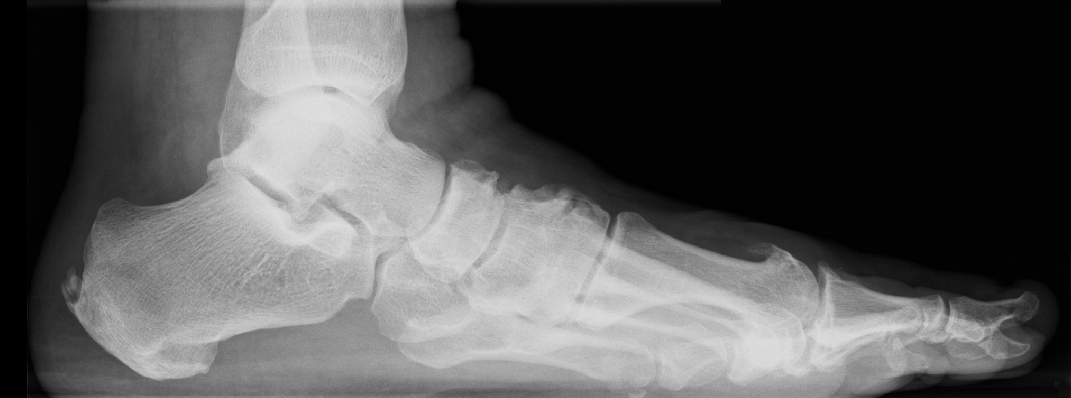
Degenerative change can affect a number of joints in the midfoot
What Is Midfoot Arthritis?
The midfoot contains several small joints that connect the forefoot to the hindfoot. These joints help the foot adapt to uneven ground, absorb shock, and create a stable platform for movement.
Midfoot arthritis occurs when the cartilage in these joints wears down or becomes inflamed. This can lead to:
Pain across the top or inside of the foot
Stiffness, especially in the morning
Swelling over the midfoot
Difficulty pushing off when walking
Pain when going downstairs or walking uphill
A feeling of “collapse” or reduced arch support
Symptoms often fluctuate depending on activity levels and footwear.
Why Does Midfoot Arthritis Happen?
Midfoot arthritis can develop for several reasons, including:
Previous injury
Even an old sprain or fracture can change how the joints load over time.Repetitive strain
Long periods of standing or high‑impact activity can irritate the joints.Foot shape
Flat feet or very high arches can increase pressure on the midfoot.Age‑related changes
Natural wear and tear can affect the cartilage.Joint hypermobility
Increased movement can overload the midfoot joints.Inflammatory conditions
Such as rheumatoid arthritis or other systemic conditions.
Often, it’s a combination of factors rather than one single cause.
Why Does Midfoot Arthritis Hurt So Much?
The midfoot is a high‑load area. Every step places significant force through these joints, especially during the push‑off phase of walking.
Pain tends to persist because:
The joints are under constant load
The surrounding soft tissues become irritated
The foot may compensate, creating new pressure points
Footwear can either help or worsen symptoms
People often unknowingly change how they walk
This is why midfoot arthritis rarely settles with rest alone.
Is Midfoot Arthritis Serious?
Midfoot arthritis isn’t dangerous, but it can be very limiting. Left unaddressed, it can lead to:
Increased stiffness
Reduced walking tolerance
Secondary pain in the ankle, knee, or hip
Progressive changes in foot shape
Difficulty with daily activities
Early clarity helps prevent long‑term frustration.
When Should You Get Midfoot Pain Checked?
It’s worth booking an assessment if:
The pain has lasted more than a few weeks
You’re getting swelling or stiffness
Walking uphill or downstairs is uncomfortable
You’ve changed how you walk to avoid pain
You’re unsure whether it’s arthritis, tendon irritation, or something else
You’ve had a previous foot injury
The pain keeps returning
A detailed MSK assessment can help identify which joints are involved and what’s contributing to the load.
Why an MSK‑Focused Assessment Helps
Midfoot arthritis is a mechanical problem, so understanding the mechanics is key.
An assessment can help identify:
Which joints are irritated
How your foot loads during walking
Whether your arch is collapsing or too rigid
How footwear is influencing symptoms
Whether imaging (such as ultrasound or X‑ray) would add clarity
This gives you a clear explanation of why the pain is happening and what factors are keeping it going.
A Final Reassurance
Midfoot arthritis is common, and it doesn’t mean you have to stop being active. Understanding what’s driving the pain is the most important step. With the right assessment, you can get clarity on what’s happening and what will make the biggest difference.
If midfoot pain is starting to get in the way of your day, an MSK‑focused assessment can help you understand what’s going on and what’s contributing to the discomfort.