
Fungal Toenails: What They Are, Why They Happen, and When to Get Them Checked
Over the past few months, there’s been a noticeable rise in people asking about fungal toenails. It’s a condition that affects a large proportion of adults at some point in their lives, but it often sits quietly in the background until something brings it into focus. Understandably, many people are now paying closer attention to changes in their nails and looking for clear, reliable information about what fungal infections actually are.
The good news is simple: fungal toenails are common, manageable, and rarely serious. But they can be stubborn, confusing, and easy to misinterpret — which is why getting the right advice early makes such a difference
What Exactly Is a Fungal Toenail?
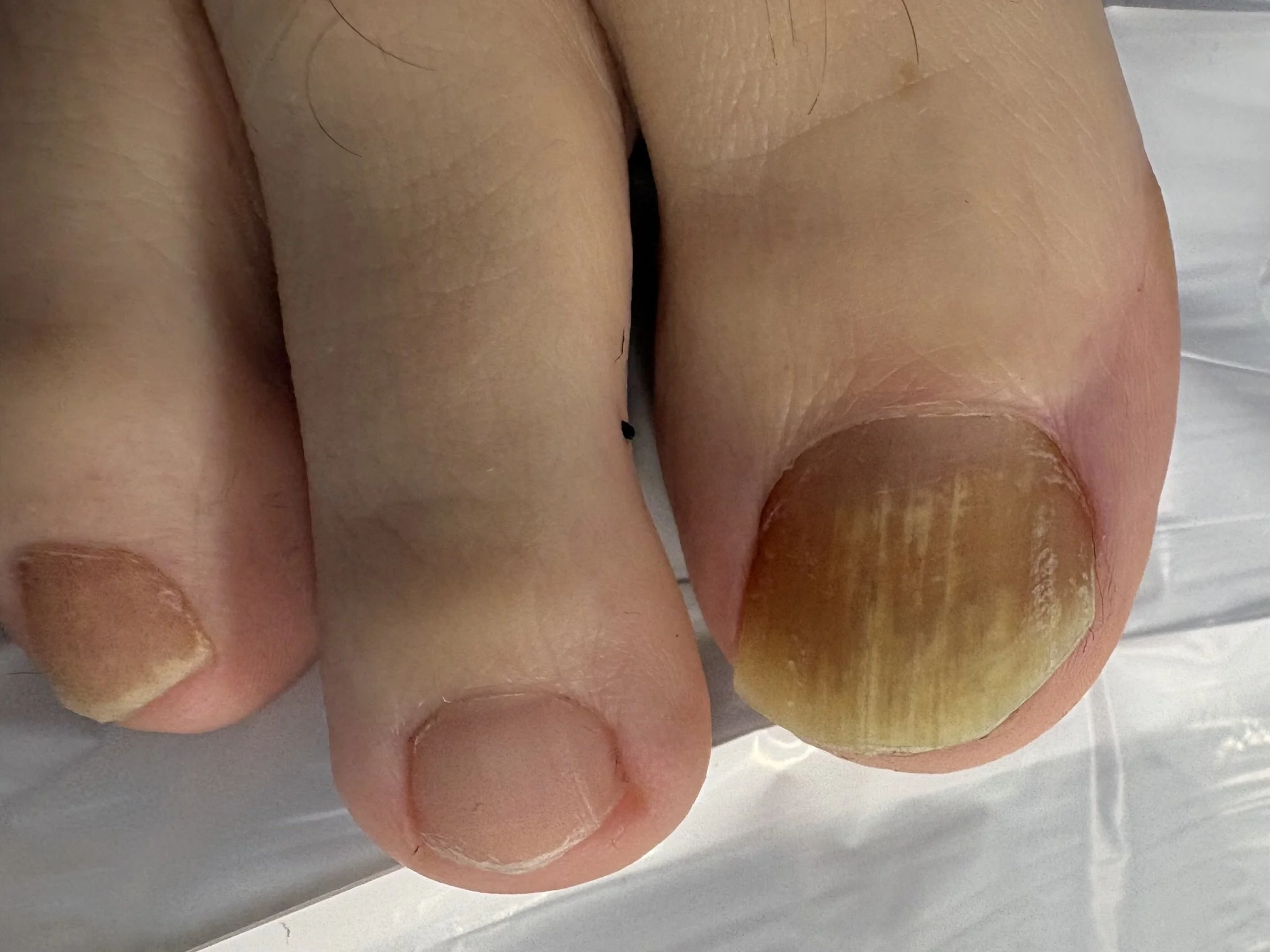
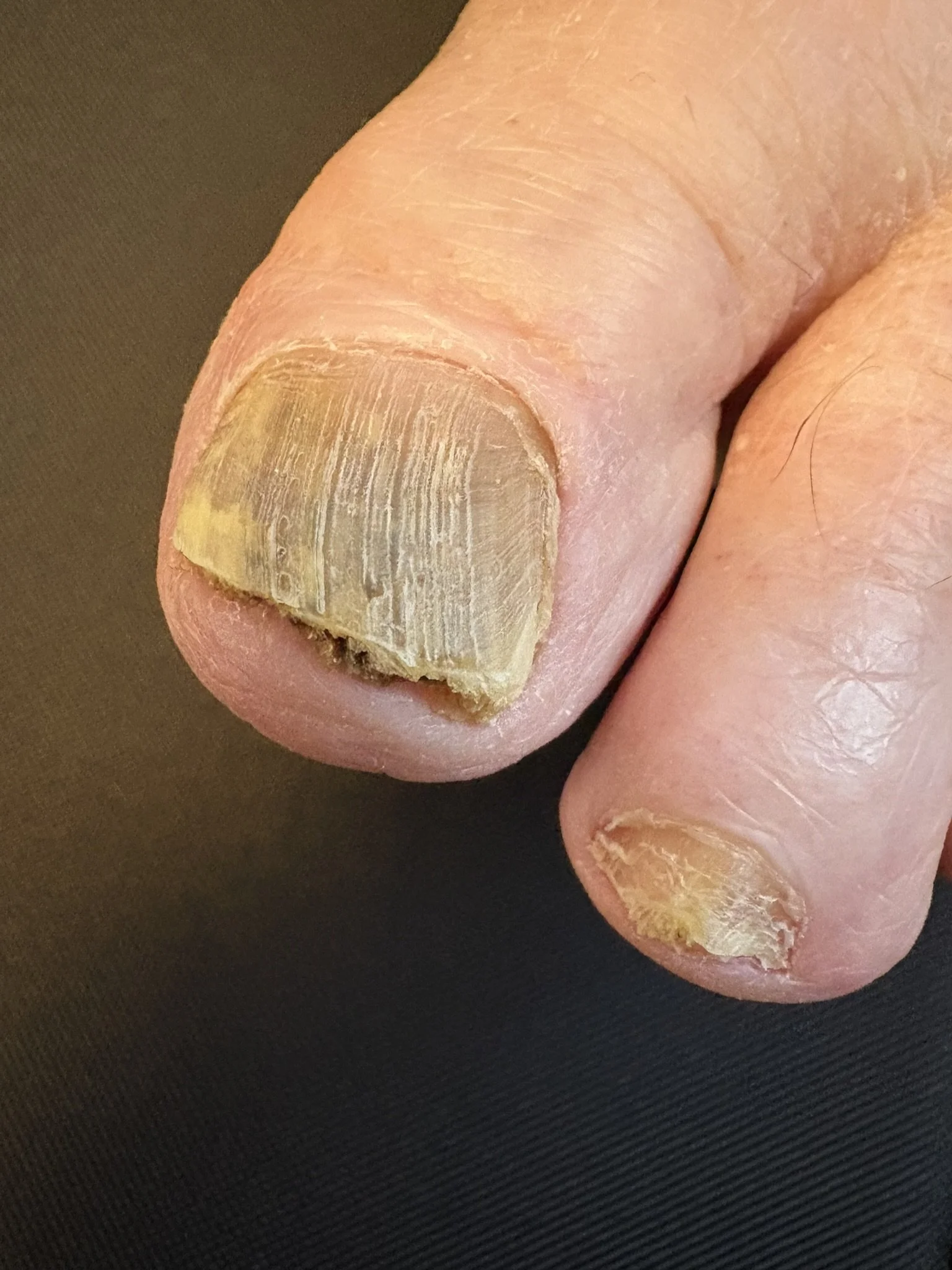
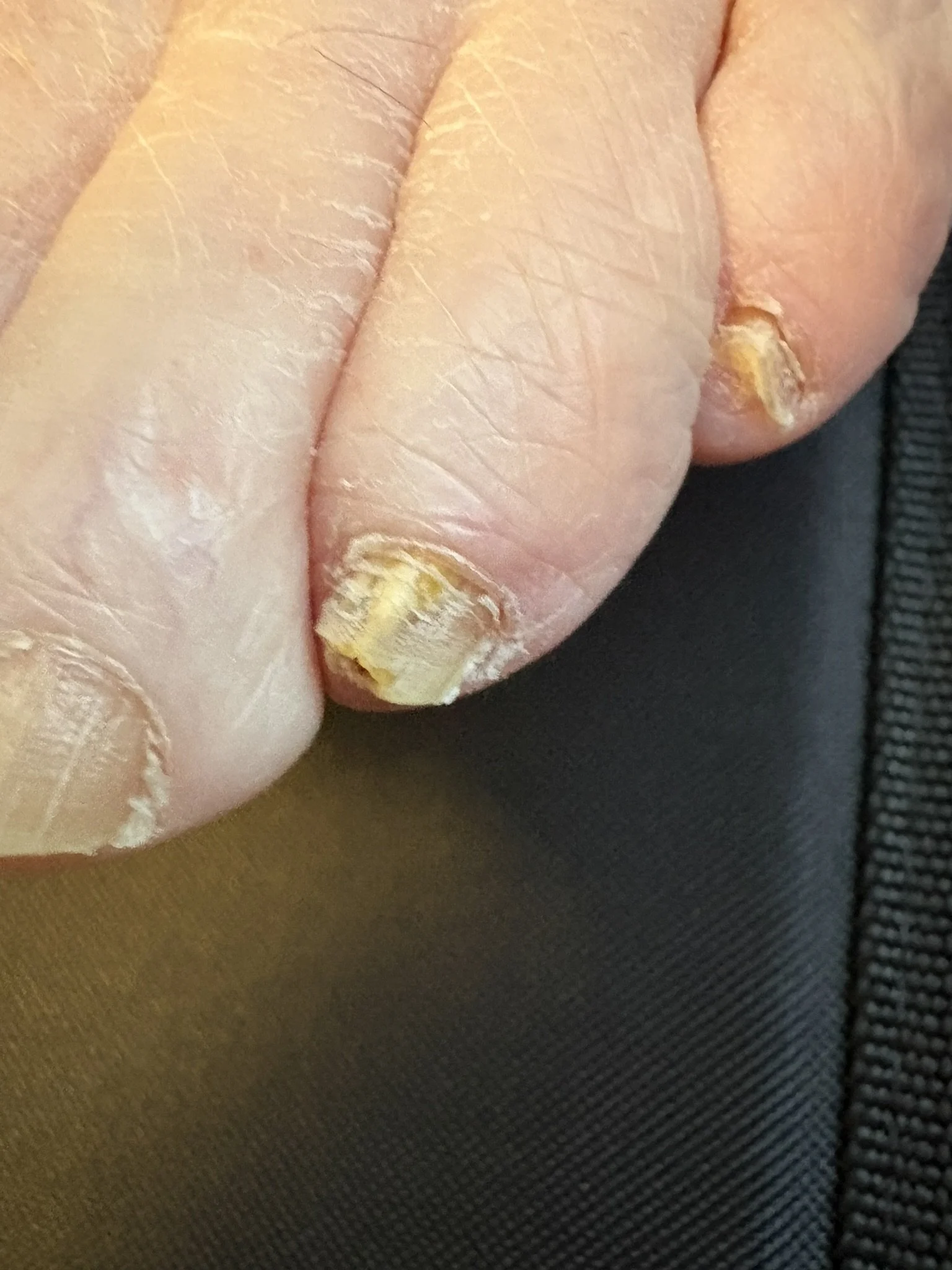
A fungal toenail (onychomycosis) is an infection of the nail caused by microscopic organisms called dermatophytes. These fungi thrive in warm, moist environments and can enter the nail through tiny cracks, lifting the nail from the skin underneath.
Once established, they can cause:
• Yellow, brown, or white discolouration
• Thickening or crumbling of the nail
• A change in shape or texture
• Detachment from the nail bed
• A brittle or flaky surface
It’s not usually painful, but it can be unsightly, persistent, and frustrating.
Why do Fungal Nails Develop
There’s no single cause — it’s usually a combination of factors:
• Footwear that traps heat and moisture
• Nail trauma, even minor knocks
• Age‑related changes in nail structure
• Reduced circulation
• Shared surfaces like gyms, pools, and changing rooms
Some people can go years without noticing anything until the nail slowly changes colour or thickness.
Are Fungal Toenails Dangerous?
For most people, fungal nails are not harmful. They don’t spread rapidly, they don’t cause systemic illness, and they don’t usually affect mobility.
However, they can matter more if you have:
• Diabetes
• Circulation problems
• A weakened immune system
• Recurrent skin infections
In these cases, even small changes in the feet are worth monitoring.
Why Are They So Hard to Shift?
Fungal nails have a reputation for being stubborn — and for good reason.
• Toenails grow slowly
• The infection sits deep within the nail
• The nail itself protects the fungus
• Reinfection is common
• Not all discoloured nails are fungal (psoriasis, trauma, and other conditions can look identical)
This is why a proper assessment is so important. Many people spend years trying over‑the‑counter products for a condition they may not actually have.
What Actually Helps?
There are several evidence‑based approaches to managing fungal nails, but the right option depends on:
• The type of fungus
• The severity of the infection
• How many nails are involved
• Your general health
• Your goals (cosmetic improvement vs full clearance)
Because of this, there’s no single universal solution, and what works for one person may not work for another.
This is exactly where a podiatric assessment becomes valuable — identifying what’s really going on and discussing realistic expectations.
What Definitely Doesn’t Work?
Despite what the internet promises, fungal nails don’t respond to:
• Vinegar
• Tea tree oil
• Coconut oil
• Garlic
• “Miracle” home remedies
• Random over‑the‑counter creams not designed for nails
These may feel harmless, but they often delay proper diagnosis and allow the infection to progress.
When Should You Get a Fungal Nail Checked?
You don’t need to wait until it’s severe. It’s worth booking an assessment if:
• The nail has changed colour or thickness
• It’s spreading to other nails
• You’re unsure whether it’s fungal or trauma
• You have diabetes or circulation issues
• You’re concerned about how it looks
• You’ve tried products without improvement
• You want clarity before any future medical procedures
A simple examination — and, if needed, a nail sample — can confirm what’s going on and help you understand your options.
A Final Reassurance
Fungal toenails are incredibly common, and they’re nothing to be embarrassed about. They don’t reflect poor hygiene, and they’re not a sign of anything serious in most cases. But they can be persistent, confusing, and cosmetically frustrating — and that’s where professional guidance makes all the difference.
If you’ve noticed changes in your nails and want clarity, reassurance, or a proper diagnosis, we’re here to help.